
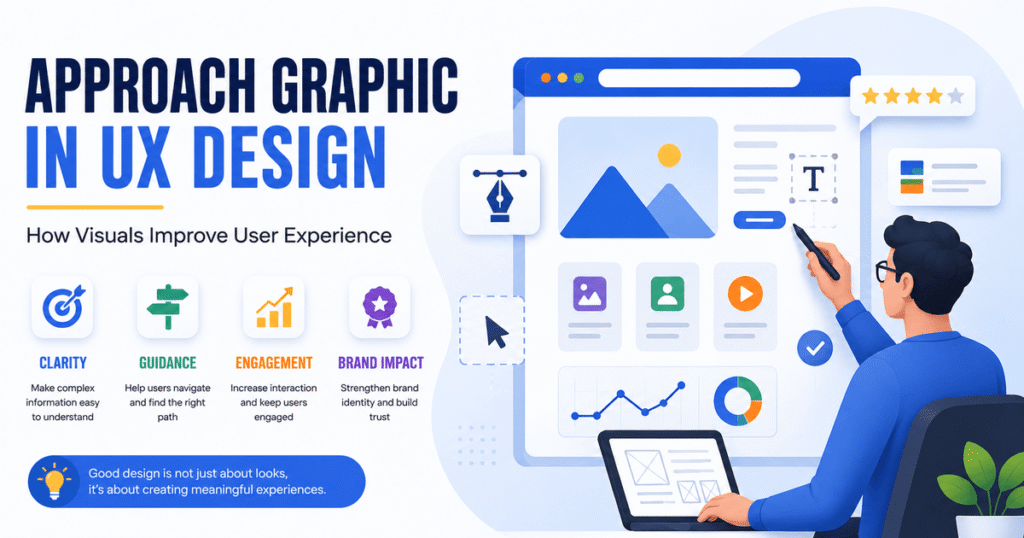
In today’s world businesses need more than just nice looking websites and apps to get and keep customers. People who use these products want them to be easy to use, make sense and be fun. This is where graphics in user experience design can really make a difference. By using pictures and other visual things in a way businesses can show users what to do, explain things clearly and make it easier for them to use their products.
For people who own businesses and marketers, knowing about graphics in user experience design can help their websites work better, make their brand message stronger and make their digital products more user friendly. Graphics are not just things to look at. When they are planned correctly they can actually change how users understand, find their way and use a product. Graphics, in user experience design can really help businesses make their digital products more fun to use.
What Is Approach Graphic in UX Design?
Understanding the Concept
The term approach graphic in UX design refers to the strategic use of graphics, illustrations, icons, diagrams, visual cues, and other graphical elements to support the user experience. Instead of adding visuals purely for aesthetic purposes, designers use them to help users understand information and complete tasks more easily.
An effective approach graphic in UX design considers the user’s needs, expectations, and behavior. Every visual element should have a purpose and contribute to the overall experience.
Why Graphics Matter in UX
People process visual information quickly. A well-designed graphic can communicate an idea faster than a large block of text. For businesses, this means graphics can help explain products, highlight important features, simplify complex information, and encourage users to take desired actions.
When businesses apply approach graphics in UX design effectively, they can make digital platforms easier to understand while also creating a consistent visual identity.
How Approach Graphic in UX Design Improves User Experience
Makes Information Easier to Understand
One of the benefits of using graphics in UX design is better information clarity. Hard to explain ideas can be tough to share with words. Graphics can take information and split it into smaller and easier to understand visual parts.
For example an online financial service might use charts and symbols to show how people spend money by giving users long explanations. This makes it easier for people to process the information faster.
Guides Users Through Digital Experiences
Graphics are really helpful because they show us what to do. We use things like arrows and icons and pictures to help people know where to look. These graphics can also show us what to do next.
A good graphic design in UX design is very important because it helps people find their way around a website or application. When people know what to do away with, like where to click or scroll they are more likely to stay on the website or application and keep using it.
Benefits for Businesses and Marketers
Strengthens Brand Communication
For marketers keeping the look and feel is very important for making a brand easy to recognize. Colors, pictures, symbols, fonts and other visual parts can show what a brand is, like.
Using the style in user experience design together with a steady brand plan helps companies make experiences that work well and are easy to remember. A good visual experience can also make people think a company is more trustworthy and reliable.
Increases Engagement and Conversions
Good user experience can have an impact on business outcomes. If people find a website to understand they might leave before making a purchase, filling out a form or getting in touch with a company.
A good visual approach, in user experience design can help make important actions stand out and show benefits clearly. Lead customers to key places where they can take action. For example pictures of products can show how a service works and icons can help people quickly see the benefits.
Principles of Effective Approach Graphic in UX Design
Keep Visuals Purposeful
Not every page needs a lot of pictures. When there are many images it can be hard for users to figure out what to do and it makes the website difficult to use.
The best way to use graphics in user experience design is to think about what you want to achieve. Before you add a picture or symbol you should think about whether it will help users understand what is going on, find their way around the website or do something.
Maintain Consistency and Accessibility
Consistency helps users become familiar with an interface. Graphics should follow a recognizable style, while icons and visual symbols should have clear meanings.
Accessibility should also be considered. Designers should use sufficient contrast, provide alternative text where appropriate, and avoid relying solely on color to communicate important information. A user-centered approach graphic in UX design should work for as many people as possible.
How Businesses Can Apply Approach Graphic in UX Design
Use Graphics to Explain Products
Businesses can use illustrations, diagrams, screenshots, and animations to demonstrate how products or services work. This can be particularly valuable for companies offering technical or complicated solutions.
Instead of forcing customers to read lengthy explanations, approach graphics in UX design can turn complicated concepts into easy-to-follow visual stories.
Use Visuals to Improve Website Navigation
Navigation can also get better when the right graphics are used. Icons can help people recognize sections and visual hierarchy can make important buttons and areas stand out. Marketers need to work with UX designers so that the way graphics are used in UX design helps reach business goals without making users lose focus on what they need to do.
Common Mistakes to Avoid
Using Graphics Only for Decoration
A common mistake is seeing graphics as decoration instead of tools for communication. Pretty pictures can look nice. Don’t help much if they don’t support the user’s path. An effective approach in UX design is to make graphics part of the user experience. Each important graphic needs to have a reason for being there.
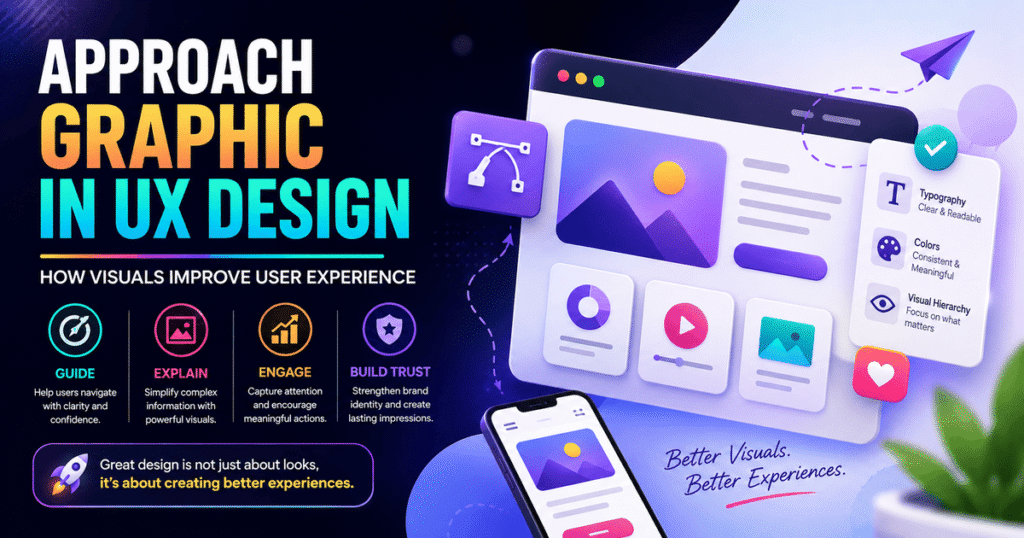
Ignoring User Needs
Another mistake is when people make visuals for what the business likes. Something that looks good to the business owner might not be what the customers want.
User research and testing and analytics and feedback can help businesses see if what they are doing with graphics in user experience design is really making things better, for people. When it comes to design the business should make decisions based on what the customers do and what the business wants to achieve. The business should think about user experience design and what the customers need.
Conclusion
A thoughtful approach to graphics in UX design can really change the way people use websites and digital products.Graphics can make things easier to understand help people find what they are looking for make a brand look better get people more interested and help businesses get customers.For people who own businesses and marketers it is important to think of graphics as a way to communicate with people not something that looks nice.By making things look good and also making sure they are easy to use businesses can make products that are easy to understand and fun to use.
The key to making graphics in UX design is to think about what the user needs and also think about what the business wants to achieve. When the way something looks and the experience of using it work together, businesses can make better digital products and build strong relationships with the people who use them.
A good approach to graphics in UX design is about making sure the user is happy and also helping the business succeed. Graphics in UX design can make a difference in how people interact with digital products so it is worth putting in the time to get it right.