
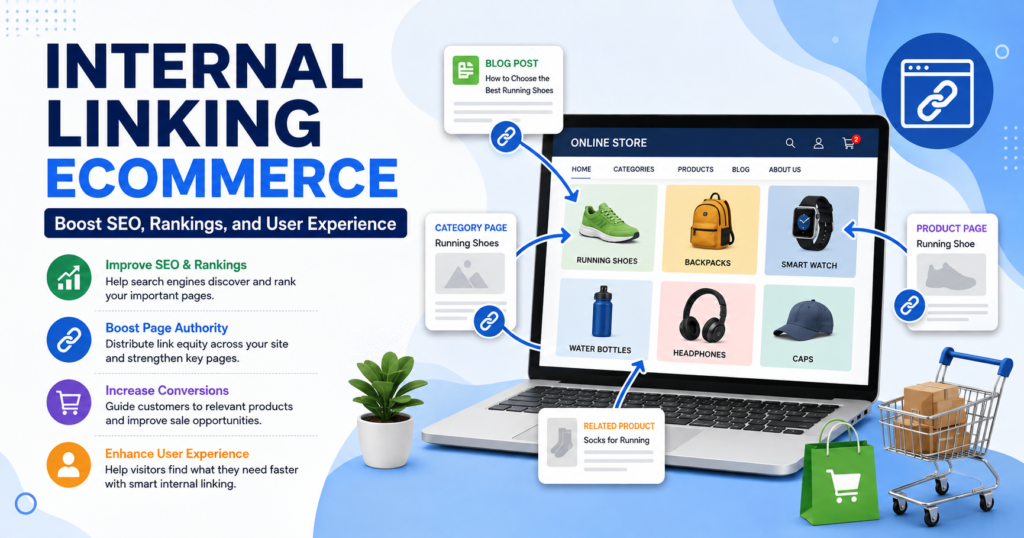
Internal linking is one of the useful but often ignored SEO strategies for ecommerce sites. When used correctly linking ecommerce strategies can help search engines find important pages, spread link authority, improve navigation and create a better user experience. Whether you run an online store or a large ecommerce website with thousands of products a strong internal linking structure can make your site easier to crawl and more valuable to visitors.
In this guide I will show how internal linking ecommerce can boost SEO, rankings, conversions and overall website performance.
What Is Internal Linking Ecommerce?
Understanding Internal Links
Internal links are hyperlinks that connect one page on your website to another page on the site. For example a blog post about running shoes can link to a category page that shows running shoes. Similarly a product page can link to products or to useful buying guides.
The goal of linking for ecommerce is to make logical connections between pages on your website. These connections help users find information and help search engines see the structure and importance of your content. Internal links play a role in guiding visitors and boosting site navigation.
Why Ecommerce Stores Need Internal Links
Ecommerce websites usually have product pages, category pages, subcategories, blogs, guides and other types of information. If the links on the site are not set up properly some pages might be hard for search engines and people to locate.
A planned internal linking approach creates connections between these pages. It can also help spread link equity across the website making sales-oriented pages more visible, in search results.
How Internal Linking Ecommerce Improves SEO
Helps Search Engines Discover Pages
I notice that search engines use links to walk through websites and find information. Internal links give paths that let search engine bots go from one page to another.
I see that internal linking is very important for ecommerce stores that have items. Products that are many clicks away from the home page may get notice if products are not well connected. Good linking ecommerce makes sure that key pages have easy links, from the right parts of the site.
Distributes Link Authority
Internal links can help spread authority across your website. When a high-authority page links to a category or product page it can assist search engines in recognizing the linked page as valuable.
For linking in ecommerce, prioritize pages that are important for organic traffic and revenue. Category pages, selling products and high-value landing pages should usually receive relevant internal links, from strong pages throughout the site.
Best Internal Linking Ecommerce Strategies
Link From Blog Content to Product Pages
Your ecommerce blog can turn into an internal linking asset. When writing content look for natural chances to link to relevant products or categories.
For example an article about choosing the hiking equipment could link to the hiking boots category and individual products. This approach connects search intent with commercial pages and makes internal linking useful for both SEO and customers.
Avoid adding links to raise the number of links on a page. Every link must offer value to the reader.
Use Relevant Anchor Text
Anchor text is the words that appear in a hyperlink. Anchor text that describes what a link leads to helps users know where the link will take them. Anchor text also gives search engines context about the linked page.
Do not use phrases like ‘click here’ for anchor text. Instead write anchor text that describes the destination page. For example writing ‘womens waterproof hiking boots as anchor text gives more context. Using anchor text is a key part of internal linking, in ecommerce.. Do not repeat the same keyword too many times. Keep anchor text natural and varied.
Internal Linking Ecommerce for Better User Experience
Help Customers Find Related Products
Internal links help make shopping easier by guiding customers toward products. When a product page uses links it can point to complementary items, alternative choices, popular picks and fitting categories. For instance a camera product page might use links to show camera lenses, memory cards, tripods and protective cases. Using links in ecommerce improves navigation and can raise the average order value.
Reduce Navigation Friction
Customers need to navigate your website without having to keep going back to the homepage or using the search box every time.
By using internal links you can help visitors move from information pages to category pages and then to specific products. A clear and thoughtful linking system in your ecommerce site makes it simple for customers to go from discovering something new all the way, to making a purchase.
Common Internal Linking Ecommerce Mistakes
Adding Too Many Links
I have seen that adding internal links does not automatically mean better SEO. Adding internal links can make pages hard to read and lower the value of each internal link.
I suggest focusing on relevance, rather than quantity. Every internal link must have a purpose and help the user move toward useful information.
Leaving Important Pages Orphaned
An orphan page is a page that does not have any links pointing to it. These pages can be hard for users and search engines to find. It is important to check your website to find any important orphaned pages.
Improving your linking structure in your ecommerce site can help make sure that key products and categories are linked to other relevant pages..
Conclusion
A strong internal linking strategy is essential for ecommerce SEO. Linking ecommerce helps search engines discover pages, understand website architecture, distribute authority and identify important content. At the time it gives customers clearer navigation and helps them discover products that match their needs.
For the results create links based on relevance, use descriptive anchor text, connect blog content with commercial pages and regularly check for broken or orphaned pages. A consistent linking ecommerce strategy can support higher rankings, stronger user engagement and better ecommerce performance over time.